
Department of Pathology,
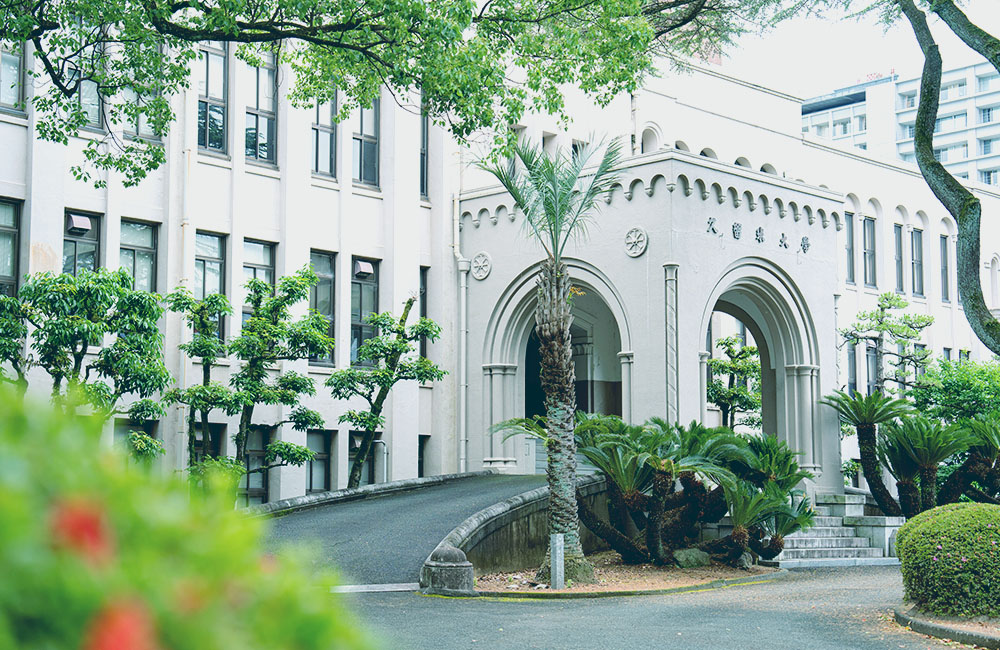
Kurume University School of Medicine.

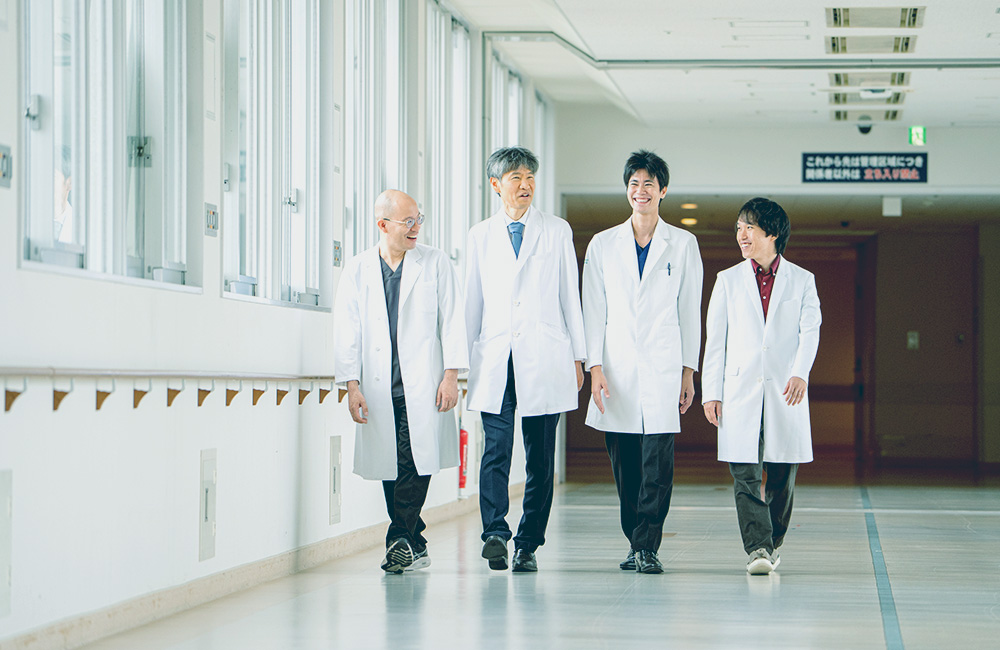
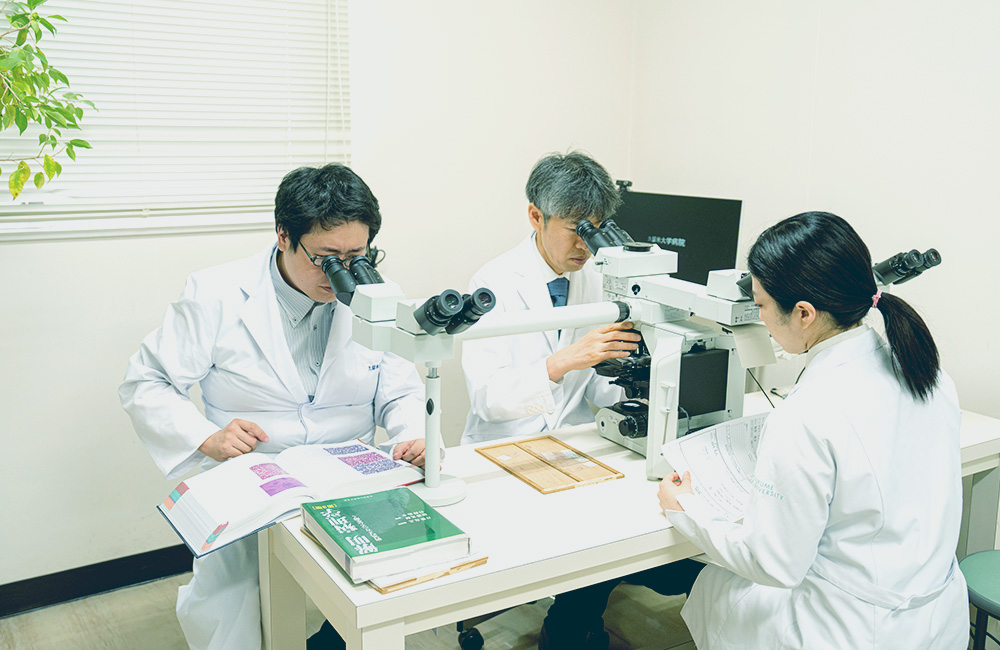
The Department of Pathology at Kurume University School of Medicine is committed to advancing medicine through pathological diagnosis, education, and research.
Since its establishment in 1928, the Department has contributed to the development of pathology, with particular strengths in liver pathology and tumor pathology. Today, we continue to pursue clinically relevant research while providing comprehensive education and training for medical students, residents, graduate students, and future pathologists.
Our mission is to:
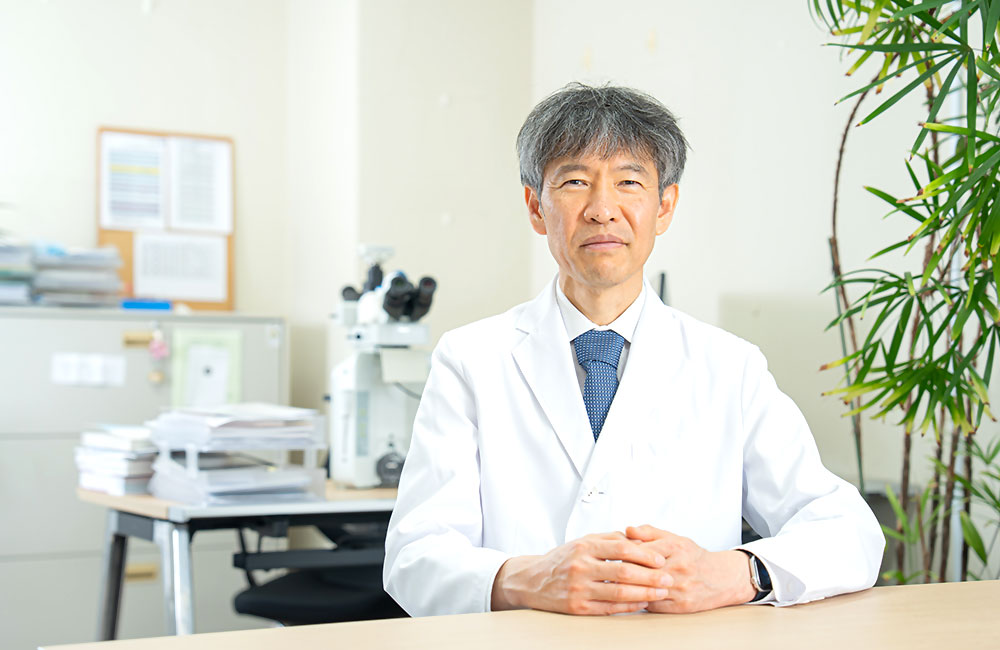
My name is Jun Akiba, and I was appointed Professor and Chair of the Department of Pathology, Kurume University School of Medicine, effective July 1, 2024.
It is a great honor to assume leadership of this distinguished Department, which has produced many outstanding pathologists and has earned a strong reputation both nationally and internationally. At the same time, I am keenly aware of the responsibility entrusted to me.
Pathology is the discipline of interpreting tissues and cells to understand what is occurring within a patient’s body. By establishing the basis for diagnosis and supporting decisions regarding treatment, pathology plays a fundamental role in modern medicine.
Pathologists are expected not merely to know the correct diagnosis, but also to explain why they have reached that conclusion. They must develop the ability to integrate individual findings and arrive at a diagnosis through logical and systematic reasoning.
This ability to “think pathologically” will become a valuable asset in clinical practice, regardless of the specialty that students and residents may ultimately pursue.
At the Department of Pathology, Kurume University School of Medicine, we are committed to providing careful instruction and a supportive learning environment in which students and residents can develop into physicians who think independently. We welcome questions, discussion, and the willingness to continue exploring difficult problems.
Our research philosophy is to pursue pathology-based studies that are directly relevant to medicine and genuinely beneficial to clinical practice.
Pathology is not only a diagnostic discipline but also a field that investigates the essential mechanisms of disease and contributes to the advancement of clinical medicine. Research findings should ultimately be translated into improved patient care.
Although scientific research is inevitably influenced by current trends, we also believe in addressing important clinical questions that have remained unresolved over many years. By actively mentoring medical students, residents, and graduate students, we aim to pass the Department’s academic tradition on to the next generation and produce research of international significance.
We place importance on maintaining an appropriate balance among diagnostic practice, research, and education.
Our goal is to create an open and supportive working environment in which physicians, research assistants, technical staff, and administrative staff can make full use of their abilities.
The Department is guided by the principles of the 3Cs:
Through open communication, mutual cooperation, and objective discussion, we aim to build a healthy and sustainable academic department.
The Department supports regional healthcare by assigning pathologists to hospitals in Fukuoka City and the Chikugo area.
We remain committed to educating and training highly qualified pathologists who can provide stable and reliable pathology services throughout the region. We also support pathologists working at affiliated hospitals so that they can perform their diagnostic responsibilities with confidence.
We contribute to patient care through the pathological examination of:
We also participate in multidisciplinary conferences with clinical departments and support treatment planning through pathological diagnosis.
We provide pathology education for:
Our research includes clinicopathological, molecular, and translational studies of human diseases, with particular expertise in:
The Kurume University Pathology Residency Program is jointly organized by the Department of Pathology, Kurume University School of Medicine, and the Division of Diagnostic Pathology, Kurume University Hospital.
The program is designed to train well-balanced pathologists who possess not only diagnostic knowledge and technical skills, but also professionalism, communication skills, and an understanding of multidisciplinary medicine.
Trainees rotate through Kurume University Hospital and affiliated training hospitals over a three-year period. The program offers exposure to a wide variety of diseases, surgical pathology specimens, biopsy specimens, cytology specimens, intraoperative consultations, and autopsy cases.
The program aims to develop pathologists who can:
Trainees develop fundamental skills in surgical pathology, biopsy diagnosis, cytology, specimen dissection, autopsy pathology, clinical-pathological conferences, medical safety, and relevant legal and ethical issues. Training may begin at Kurume University or at one of the major affiliated hospitals.
Trainees gain experience with more specialized and challenging cases under the supervision of board-certified pathologists. They participate in autopsy practice and clinicopathological conferences, organ-based diagnostic training, cytopathology, multidisciplinary conferences, and academic presentations.
Trainees work toward greater diagnostic independence and gain advanced experience in complex surgical pathology, specialized cytopathology, molecular pathology, intraoperative consultation, autopsy diagnosis, and clinical-pathological correlation. Required educational courses and preparations for the pathology board examination are completed during this period.
The training program provides experience in:
The program includes numerous collaborating hospitals with different clinical strengths. This allows trainees to experience both highly specialized medical care and community-based medicine.
Trainees are encouraged to participate in national and regional pathology meetings and to present their own cases or research findings.
During the three-year training period, trainees are expected to present at least once as the first author or principal presenter at an academic meeting, such as the Annual Meeting of the Japanese Society of Pathology or the Kyushu–Okinawa Slide Conference of the Japanese Society of Pathology.
Trainees are also encouraged to develop their presentations into manuscripts for publication in Japanese or international medical journals. Research opportunities are available in parallel with diagnostic training. Trainees who are interested in academic careers may pursue graduate studies, domestic research training, or research experience abroad.
Following or alongside general pathology training, trainees may receive advanced instruction in areas including:
The residency program includes Kurume University Hospital and numerous affiliated institutions in Fukuoka, Kumamoto, Oita, and other areas.
These institutions provide different case profiles and educational opportunities, including university hospital practice, regional core hospital practice, cancer-specialized pathology, emergency and tertiary care pathology, community-based pathology, and pathology services at hospitals without full-time pathologists.
| Department | Department of Pathology, Kurume University School of Medicine |
|---|---|
| Address | 67 Asahi-machi, Kurume, Fukuoka 830-0011, Japan |
| Telephone | +81-942-31-7546 |
| Fax | +81-942-32-0905 |
| 1pathology-krm-group@kurume-u.ac.jp | |
| Inquiries | Clinical training, graduate education, research opportunities, and visits to the Department |

